Europe Rail Tour Packages: How Rail-Based Trips Compare With Coach Packages
Rail touring and coach touring both deliver a multi-country Europe trip in around two weeks, but they are different products at different prices with different rules at the border.
Short answer
Across the 21 escorted packages on this site, prices run from $2,110 to $5,265 per person for 12 to 16 days, all of them road-based. Rail-based touring is a separate format you mostly assemble yourself, and this guide compares the two honestly, including where a coach package wins.
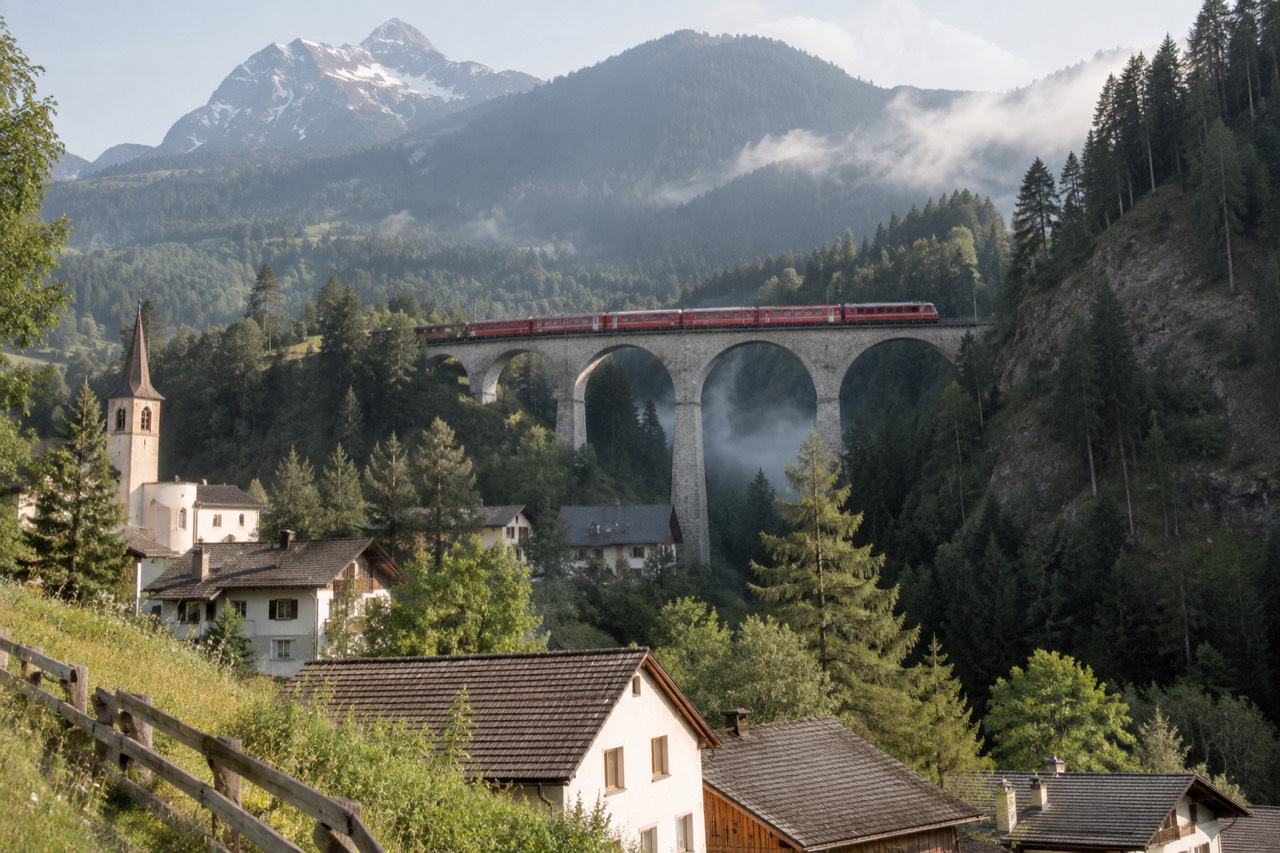
Europe's rail network is the romantic version of the continent: high speed trains between capitals, scenic mountain lines, and city-centre stations that put you a walk from your hotel instead of a coach park on the ring road. The search term "europe rail tour packages" is real and growing, but it hides a tension worth naming up front. Almost every package sold as a two week Europe tour, including all 21 verified on this site, is built around a road coach, not a rail seat. Rail-based touring exists, but it is mostly a format you assemble yourself from a rail pass, hotel bookings and a lot of timetable work. This guide compares the two formats honestly: what a rail-first trip actually involves, what the escorted packages cost and include, where each format wins, and what the border paperwork looks like either way. Every price and rating below comes from the verified roster of packages on 14 Days Europe Tour Packages, and where this site has no verified figure, it says so rather than inventing one.
What Are Europe Rail Tour Packages?
A rail tour package bundles accommodation, some meals and a guided route across several countries, with the travel between them by train rather than coach, and the format sits at a different price point because rail seats, city-centre hotels and smaller groups all cost more than a coach seat. The escorted market, though, is overwhelmingly road-based: every one of the 21 verified multi-country packages on this site moves its travellers by coach.
The distinction matters because the two products are sold to different travellers. A coach package is a closed loop: one vehicle, one driver, one tour manager, luggage carried door to door, and a price that starts at $2,110 per person for the cheapest 14 day itinerary on the roster. A rail-based trip trades that single-vehicle simplicity for city-centre arrivals, no coach transfers at all, and the freedom to pick your own train times, at the cost of doing the planning yourself or paying a specialist operator to do it for you. This site's roster carries the road version of the product, and the honest way to use it is as the benchmark: if a rail itinerary you are pricing comes in far above the coach equivalent, you now know by exactly how much.
None of that makes rail the wrong choice. Trains arrive in the middle of the city, which removes the transfer time a coach adds at both ends of every stop. They also let a traveller chain cities that a road route serves badly, and they suit anyone who simply does not want to spend two weeks on a coach. The question this guide answers is not "which is better" but "what does each format cost, include and demand", because those are the facts a booking decision actually rests on. For the deeper format comparison, the companion piece on rail passes versus coach tours works through the same trade-off from the independent-travel side.
How Much Do Rail And Coach Packages Each Cost?
The verified escorted packages on this site run from $2,110 to $5,265 per person for the land package, with a median of $3,235, and those prices cover 12 to 16 day itineraries with accommodation and some meals included. No rail-based package on this roster exists to compare directly, so the honest comparison is cost per day: the coach packages work out at $151 to $437 per day, with ten of the 21 between $150 and $230.
That per-day spread is the most useful number in the whole format debate, because it is the figure you test any rail itinerary against. A rail trip built from a pass plus separate hotels has no single headline price, and this site has verified no rail fare or pass price to quote, so the honest method is arithmetic on the package side and your own quotes on the rail side. If a specialist rail operator quotes a 14 day itinerary, divide by fourteen and set the result against the figures below. That single calculation tells you whether you are paying a rail premium of ten percent or of double.
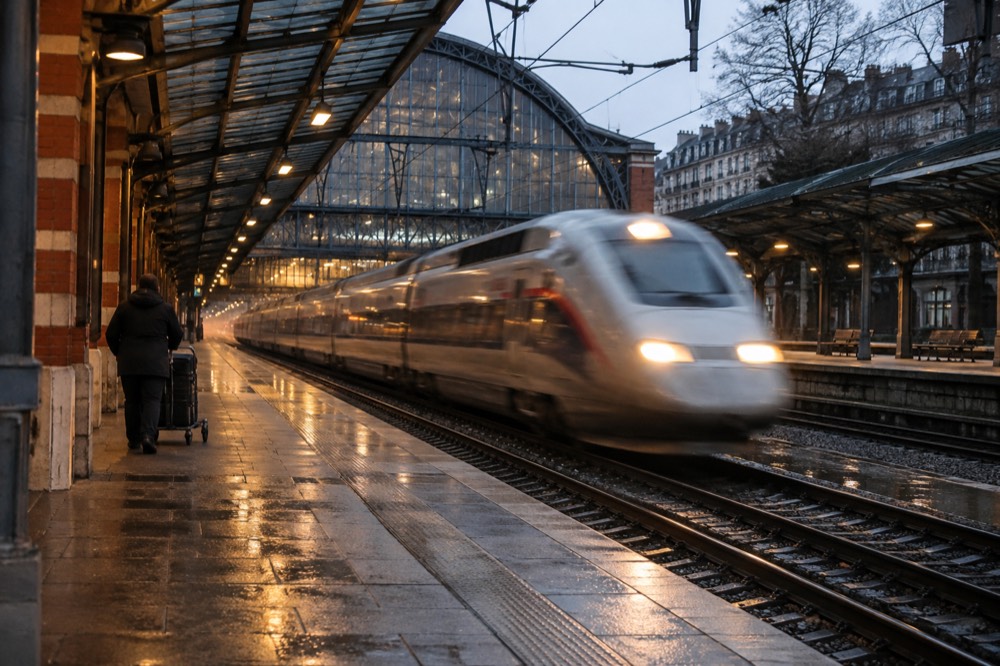
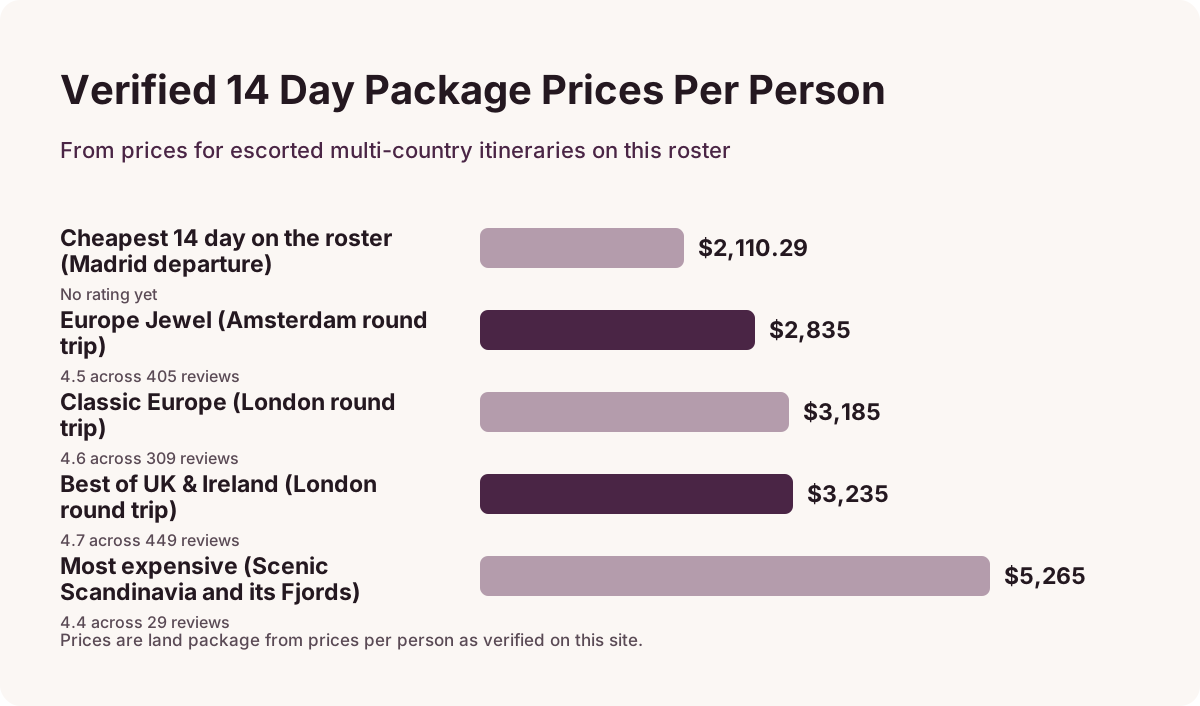
The table shows the format's actual price ladder, using the three packages this site highlights alongside the roster's cheapest and most expensive entries. Every figure is the verified land price per person.
| Package | Days | From price (per person) | Rating |
|---|---|---|---|
| Classic Europe (London round trip) | 14 | $3,185 | 4.6 across 309 reviews |
| Europe Jewel (Amsterdam round trip) | 14 | $2,835 | 4.5 across 405 reviews |
| Best of UK & Ireland (London round trip) | 13 | $3,235 | 4.7 across 449 reviews |
| Cheapest 14 day on the roster (Madrid departure) | 14 | $2,110.29 | No rating yet |
| Most expensive on the roster (Scenic Scandinavia and its Fjords) | 14 | $5,265 | 4.4 across 29 reviews |
Two patterns worth reading out of that table. First, the packages built around the classic western cities, the ones a rail itinerary would most plausibly mirror, cluster in the middle of the roster's price span, well under the premium end. Second, the premium end of the roster is not rail competition at all: the fjord and alpine country-road itineraries charge for scenery and smaller roads, not for transport mode. The cost breakdown guide on this site, what a Europe tour package price contains, unpacks the same figures line by line.
Do Trains Change The Border Paperwork On A Multi-Country Trip?
No, and this is where rail itineraries surprise people: the border rules depend on which countries you enter, not how you enter them. The EU's Entry/Exit System has been fully operational at every external border crossing point since 10 April 2026, and it applies at road, rail, air and sea crossings alike, so a train from Serbia into Croatia registers exactly the same way a coach does.
The EU's own description of the system is mode-neutral: it registers non-EU nationals at external borders, taking a facial image and fingerprints at first crossing, and the official EES page states plainly that the progressive period ended on 9 April 2026 and manual passport stamping was abolished the following day. There is no fee for EES registration, and the UK's foreign travel advice notes only that it may take each passenger extra time at the border, with no official figure for how much. A rail queue and a coach queue are the same system at the same booth.
The subtlety that actually matters on these itineraries is which countries are inside the Schengen area. Croatia, Bulgaria and Romania are all inside, joined by Bulgaria and Romania on 1 January 2025, while Serbia, Bosnia and Herzegovina, Montenegro, Albania and North Macedonia are all outside. A Balkans loop that dips in and out of Croatia therefore crosses an external Schengen border more than once, and EES registration can happen more than once on a single trip. The European Commission's Schengen area page carries the definitive country list. Days spent in the non-Schengen countries do not consume the 90 day Schengen allowance at all, which is a genuine planning advantage of the Balkans routes.
ETIAS, the electronic travel authorisation, changes none of this yet. It is not in operation and no applications are being collected; the EU expects it in the last quarter of 2026 and will announce the specific date several months before launch. When it does start it will apply to nationals of 59 visa-exempt countries travelling to 30 European countries, the 29 Schengen members plus Cyprus, and it will cost EUR 20. The full detail, including the transitional and grace periods, is in the site's dedicated guide to ETIAS and Schengen rules for a 14 day Europe trip. One format-specific note: a London leg is not covered by ETIAS at all, because the United Kingdom is outside the scheme and applies its own ETA, which costs GBP 20 and is needed even when only transiting UK border control. Two of the roster's Britain and Ireland packages start in London, so that applies to them.
Which Cities And Countries Do Two Week Packages Actually Reach?
Austria and Germany appear on 11 of the 21 verified itineraries, Italy and Switzerland on 8 each, France on 7, and the narrowest trip still crosses 2 countries while the widest crosses 10. Five of the 21 cross exactly 8 countries, which is the practical ceiling for a comfortable two week pace, whether the wheels are steel or rubber.
That country frequency table is the single best answer to "where can a two week trip actually go", because it is counted from real itineraries rather than aspiration. It also explains why the classic western loop is the format both rail and coach versions converge on: Vienna, Munich, the Swiss passes and the Italian lakes sit along natural corridors that suit a train and a coach almost equally well.
| Country | Appears on (of 21 itineraries) |
|---|---|
| Austria | 11 |
| Germany | 11 |
| Italy | 8 |
| Switzerland | 8 |
| France | 7 |
| Netherlands | 6 |
| Belgium | 5 |
| Hungary | 5 |
| Serbia | 5 |
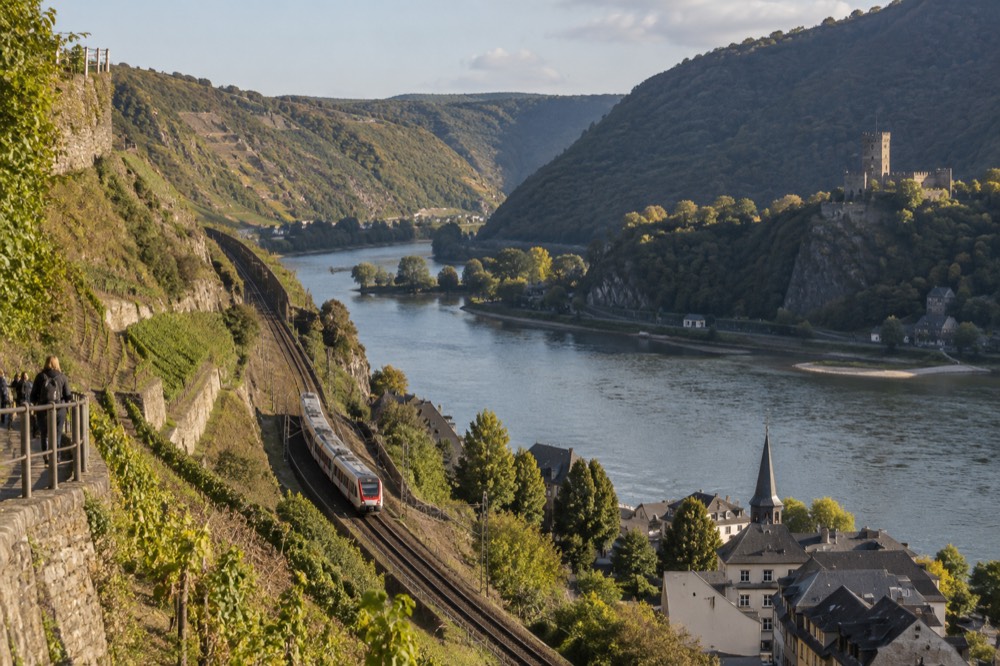
The rail-relevant reading of that table is corridor shape. The high frequency of Austria, Germany, Switzerland and Italy reflects a geographic spine where the main rail lines run, so a rail-first traveller can cover the same headline cities as the coach packages without ever leaving the network's best-served section. The Balkans and Baltic routes are the opposite case: the countries are less rail-dense, cross-border train services are thinner, and the escorted coach packages there, such as the Balkan Experience loop from Belgrade at 14 days from $2,517 per person, are doing work a rail pass would struggle to replicate in the same two weeks. The site's guide to how 14 days splits across Europe's countries breaks down the same arithmetic day by day.
One honest limitation of any country-count comparison: a stop is only counted where the listing confirms it, and some tours pass through countries without a real stop. The verified roster marks conditional stops as options rather than promises, and a rail itinerary you build yourself has the same trap in reverse, since a train change in a city is not a visit to it. Count the places you will actually get off, not the ones the map touches.
How Does Pacing Differ Between Rail And Road Itineraries?
A coach package moves its whole group on one fixed schedule, usually one or two stops per day with the driving done overnight or in long morning stretches, while a rail itinerary lets you set the pace but makes you own every connection. On the escorted side, 19 of the 21 packages include internal transport between countries in the headline price, which is the pacing guarantee rail touring cannot give.
That transport inclusion is what pacing really means on a package. When the between-countries travel is inside the price and on the operator's schedule, the day's shape is decided for you: the group leaves when it leaves, and the itinerary's two-night stops and full-day stops are the rhythm. The trade is freedom for certainty, and travellers who value a slow morning in one city over a fixed departure time feel the trade immediately.
Rail pacing inverts every one of those sentences. You choose the departure time, you can add or drop a city without renegotiating anything, and a missed connection is your problem rather than the operator's, which cuts both ways. The cost of that freedom is logistical: luggage on trains is yours to lift, hotel locations need to be checked against stations rather than coach drop-off points, and a strike or engineering works fall on your itinerary, not on a tour operator with a duty of care. The site's guide to group size and daily pacing on Europe coach tours covers the escorted side of this in detail, including why the roster's group sizes sit on the operator listings rather than in any verified number here.
The honest summary for a reader choosing between them: rail rewards the traveller who enjoys the planning and wants city-centre arrivals, coach rewards the traveller who wants the continent unpacked. Neither is a compromise. The premium small-group packages on the roster, such as the Small Group Balkan Essentials at 12 days from $5,242 per person, sit at the coach format's most flexible end, with a stated small-group format and no verified numeric cap.
What Is Included In A Package Price Versus A Rail Trip You Build?
Across the roster, 19 of 21 packages include accommodation for every night, 19 of 21 include some meals, never all meals, and 19 of 21 include the internal transport between countries. International flights are included on none of the 21, verified against the operators' own product pages, so every headline price is a land price and the long-haul ticket is always a separate cost.
That last point deserves its own sentence in any rail comparison, because it is the most commonly misread line in the market. A package advertised from $3,185 per person covers the ground arrangements only, and a rail trip you price yourself has the same hole in it, so the two compare cleanly on land costs alone. Neither format includes the flight across the ocean.
| What the price covers | Escorted package (roster) | Rail trip you build yourself |
|---|---|---|
| Accommodation every night | 19 of 21 packages | You book each hotel |
| Some meals | 19 of 21 packages, never all | None unless you add it |
| Transport between countries | 19 of 21 packages, by coach | Rail pass or point-to-point tickets, priced separately |
| Tour manager or guide | Standard on escorted departures | Not included |
| International flights | Not included on any of the 21 | Not included |
| Free cancellation | Advertised by none of the 21 | Depends on each hotel and ticket's own terms |
The cancellation row is worth pausing on, because it is a live difference between the formats and a trap on both sides. None of the 21 packages on this site advertises free cancellation; deposits and cancellation terms belong to each operator's own booking conditions. A self-built rail trip has no single cancellation policy at all, just a stack of hotel and ticket terms you accepted one by one. The site's guide to deposits, cancellation and booking windows on Europe tours explains what the operators' terms actually say, and the guide to optional excursions and hidden costs covers the add-ons that inflate a package price after booking.
One more inclusion that rail comparisons usually miss: the escorted packages carry a tour manager whose job includes the border paperwork, the hotel check-ins and the recovery when something goes wrong. On a rail trip that role is yours. For some travellers that is the whole appeal. For others it is the exact reason they pay a package price, and both positions are reasonable.
When Is A Coach Package The Better Choice Than Rail?
A coach package is the better choice when the itinerary leaves the dense western rail corridor, when you want the border and transfer logistics carried by someone else, or when the verified price per day undercuts what a rail version of the same route would cost. The roster's own spread, from $151 to $437 per day, gives you the benchmark to test that against.
The clearest case is geography. The Balkans routes on this site, five of them, run through countries where the rail offer is thin and the coach is genuinely the practical format, and the same applies to the northern itineraries: the Baltic States and Scandinavia package crosses territory where the escorted coach at 14 days from $3,259 per person is doing something a rail pass cannot easily replicate. The western classics are the contested middle ground, and there the decision is about service, not possibility, because both formats can do Paris, the Alps and Italy well.
The second case is administrative. A multi-country trip involves passport rules, entry systems and, on some itineraries, more than one external Schengen border crossing. Schengen law asks for a passport valid at least three months beyond departure from the area and issued within the previous ten years, per the Schengen Borders Code itself, and several operators ask for more: both Contiki and Intrepid require six months in their own booking conditions. Intrepid's conditions also make travel insurance mandatory with proof on day one, while Contiki's only recommend it, a genuine contractual difference this site has verified from the operators' own published terms. A package hands all of that to a tour manager; a rail trip hands it to you. The full detail is in the site's guide to passport validity rules for Europe tours.
The third case is simply price. When the coach version of the same cities comes in at around $200 a day with hotels and some meals inside the price, a rail itinerary has to be very efficiently built to beat it, and most travellers building one find they match the price while losing the inclusions, or keep the inclusions while paying more. The budget-focused guide on cheap Europe tour packages shows where the roster's value end sits.
When Does Month Of Departure Matter For Either Format?
September is the busiest month on the roster, offered by 14 of the 21 packages, followed by May at 14 departures counting the shoulder overlap and October at 10, while February appears on none of the 21 departure calendars. That calendar shape is a fact about escorted supply, not about weather, and no climate figure on this site is verified, so none is quoted here.
The departure-month counts are the only seasonality data this site can stand behind, and they say something useful about both formats. The escorted market concentrates on May, June and September, which means those months carry the most departure choice and the fullest groups. A rail trip you build yourself has no such calendar: trains run year round, and a February trip that no package on this roster offers is entirely possible by rail, with the caveats that you accept whatever February in the Alps brings and that this site publishes no temperature or crowd figure to help you decide.
| Month | Packages offering departures (of 21) |
|---|---|
| January | 1 |
| February | 0 |
| March | 6 |
| April | 13 |
| May | 14 |
| June | 12 |
| July | 6 |
| August | 3 |
| September | 14 |
| October | 10 |
| November | 2 |
| December | 3 |
The December count of 3 includes the seasonal Classic Europe Christmas and New Year departure, a 14 day itinerary at 5.0 across 17 reviews from $3,655 per person, which is a reminder that the winter market exists but is narrow on the escorted side. For the full seasonal argument, the site's guide to the best time of year for a 14 day Europe tour works from the same verified calendar.
How Do You Actually Choose Between The Two Formats?
Choose rail when the itinerary stays inside the well-served western corridor, when you want city-centre arrivals and control of the schedule, and when you enjoy the planning itself; choose an escorted package when the route leaves that corridor, when you want a fixed price with hotels and some meals inside it, or when the verified per-day cost of the package beats your own rail build. The rest is preference, and both preferences are legitimate.
The practical test is a one-evening exercise. Take the cities you most want, price the escorted package that covers them, using the per-day figures in this guide, and then price the same route as a rail trip with the hotels you would actually book. The gap between those two numbers is the real price of the format choice, and it is different for every route. On the classic Paris, Alps and Italy spine the gap is usually small. On a Balkans or Baltic route the coach is often the only realistic escorted option, and on a two-city short trip rail wins outright, though a two-city trip is not what this site sells.
Whatever you choose, the paperwork is the same. EES is live at every external border, ETIAS is expected in the last quarter of 2026 and cannot be applied for yet, the passport needs three months beyond departure under Schengen law and six months beyond return under several operators' contracts, and insurance is a booking condition for some operators and only a recommendation for others. Those rules ride with you whether you sit on a train or a coach. The format changes the window scenery, not the border booth.
If you land on the package side, the escorted format is covered in depth across this site, starting with the guide to escorted Europe tours and the comparison of escorted, guided and independent touring. The Britain and Ireland itineraries are worth a look here too: a 13 day Best of UK & Ireland loop from $3,235 per person covers a region where the rail alternative means a completely separate national network, with its own ticketing and its own ETA requirement for many travellers.
That solo tile is the last of the individual package comparisons, and it makes the format point in miniature: even the roster's own British Isles route, the one closest to a rail-native region, is sold as a coach loop with a tour manager. If that structure appeals more than it bothers you, the escorted format is your answer, and the closing selection below gathers the three packages this guide has used as benchmarks throughout.
Common Questions About Rail And Coach Tour Packages In Europe
Are There Rail-Based Europe Tour Packages On This Site?
No. All 21 verified multi-country packages on this site travel by road coach or small-group vehicle. Rail-based touring is a format you mostly assemble yourself or book through a specialist rail operator, and this guide uses the roster's verified prices as the benchmark to test any rail quote against.
Is A Rail Trip Cheaper Than A Coach Package?
It depends on the route, and this site has no verified rail fare to quote. The benchmark is the roster's cost per day: $151 to $437, with ten of the 21 packages between $150 and $230 per day including hotels and some meals. Divide any rail itinerary quote by its day count and compare.
Do Trains Skip The New EU Border Registration?
No. The Entry/Exit System has been fully operational at every external border crossing point since 10 April 2026 and applies at rail crossings the same as road, air and sea. Registration is free, and the official guidance says only to expect it to take extra time, with no published figure for how much.
Do I Need ETIAS For A Rail Trip To Europe?
Not yet, for any format. ETIAS is not in operation and no applications are being collected. The EU expects it in the last quarter of 2026 and will announce the date months ahead. When live it will cost EUR 20 and cover 30 European countries, the 29 Schengen members plus Cyprus.
Which Countries Can You Cover In Two Weeks?
The verified itineraries cross between 2 and 10 countries, and five of the 21 cross exactly 8, which is the practical two week ceiling. Austria and Germany appear most often, on 11 itineraries each, followed by Italy and Switzerland on 8.
Are Flights Included In A Europe Tour Package?
Never, on any of the 21. Every operator's own product page lists flights in the not-included block, so every price on this site is a land price and the long-haul ticket is always your separate cost. The same applies to a rail trip you build yourself.